As a pet owner, you want the best for your furry friend—especially when it comes to their outdoor play area. One of the biggest debates in pet-friendly landscaping is whether artificial turf or natural grass is the better choice for dogs. Both options have pros and cons, so let’s break them down to help you decide which is best for your pup.
Durability and Wear Resistance
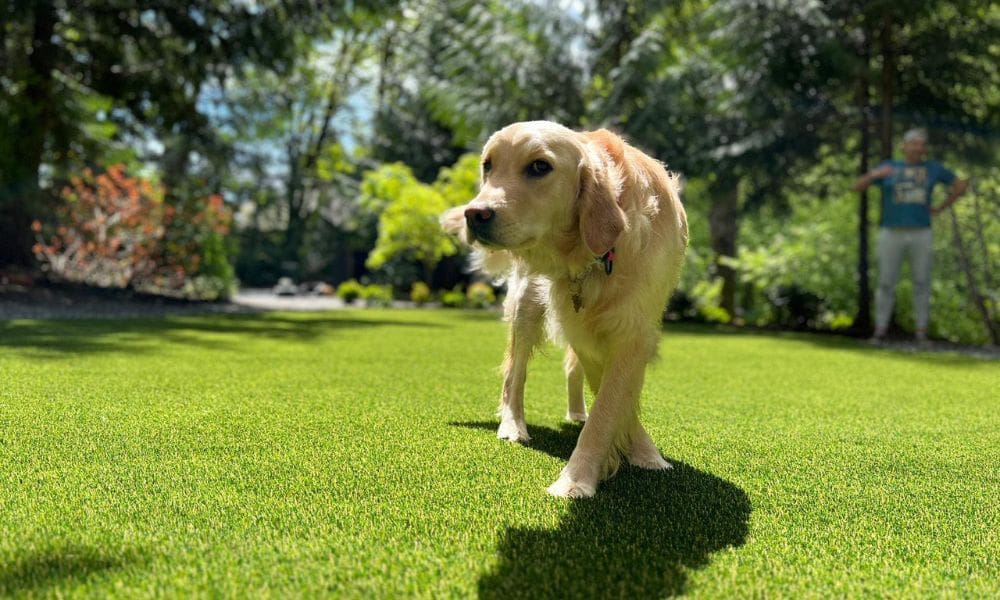
Pet-Friendly Turf
Artificial turf is designed to withstand heavy use, making it a great option for active dogs. Unlike natural grass, it won’t develop bare patches from digging or running. High-quality pet turf is also resistant to tearing and can last for years with proper maintenance.
Natural Grass
Natural grass can struggle under a dog’s constant activity. Digging, running, and frequent urination can lead to yellow spots, mud patches, and uneven terrain. While some grass types (like Bermuda or Kentucky Bluegrass) are more durable, they still require regular care to stay healthy.
Winner: Pet-friendly turf holds up better over time, especially for energetic dogs.
Maintenance Requirements
Pet-Friendly Turf
Artificial turf is low-maintenance compared to natural grass. It doesn’t need mowing, watering, or fertilizing. However, you’ll need to rinse it occasionally to remove pet waste and prevent odors. Some turf products also require infill refreshers to maintain cushioning and drainage.
Natural Grass
Natural grass demands regular upkeep—mowing, watering, fertilizing, and aerating. Dog urine can burn grass, leaving unsightly brown spots unless you rinse the area immediately. You may also need to reseed bare patches caused by digging or heavy traffic.
Winner: Pet-friendly turf wins for convenience, but natural grass may appeal to those who enjoy gardening.
Safety for Dogs
Pet-Friendly Turf
High-quality artificial turf is non-toxic and designed specifically for pets. It lacks pesticides and fertilizers, reducing chemical exposure. However, cheaper turf may retain heat in direct sunlight, potentially burning paws on hot days.
Natural Grass
Natural grass is soft and cool underfoot, but it often requires chemicals like fertilizers, herbicides, or pesticides—some of which can be harmful if ingested by dogs. Also, certain grass types may harbor fleas, ticks, or allergens.
Winner: Both can be safe, but pet-friendly turf avoids chemical risks if properly chosen.
Cleanliness and Hygiene
Pet-Friendly Turf
Artificial turf drains liquids efficiently, reducing puddles and mud. However, urine odor can build up if not rinsed regularly. Solid waste is easy to pick up, but some owners find that lingering smells require enzymatic cleaners.
Natural Grass
Grass absorbs urine, which can lead to odor and dead patches if not diluted. Mud and dirt can track into your home, especially in rainy weather. On the plus side, natural grass has microbial activity that helps break down waste over time.
Winner: Pet turf is cleaner in wet conditions, but natural grass may handle odors better if well-maintained.
Comfort and Enjoyment for Your Dog
Pet-Friendly Turf
While modern turf is soft, some dogs prefer the feel of real grass. Turf can get hotter than natural grass in summer, which may discourage playtime during peak heat.
Natural Grass
Dogs often love the texture and smell of real grass. It stays cooler in the sun and provides a natural digging surface (though this may not be ideal for your lawn’s health).
Winner: Natural grass is usually more enjoyable for dogs, but turf can be a good alternative with proper cooling measures.
Environmental Impact
Pet-Friendly Turf
Artificial turf doesn’t need water, saving resources in drought-prone areas. However, it’s made from synthetic materials (usually plastic) and isn’t biodegradable. Some eco-friendly options use recycled materials, but disposal remains an issue.
Natural Grass
Grass contributes to oxygen production and cools the environment. However, it requires significant water, and lawn care chemicals can harm local ecosystems.
Winner: Natural grass is more eco-friendly if maintained sustainably, while turf saves water.
Cost Comparison
Pet-Friendly Turf
The upfront cost is higher—installation can range from 5to5to20 per square foot. However, long-term savings on water, mowing, and lawn care may offset the initial expense.
Natural Grass
Cheaper to install initially (seeding or sod costs 0.10–0.10–0.60 per square foot), but ongoing maintenance (watering, mowing, repairs) adds up over time.
Winner: Natural grass is cheaper short-term, but turf may save money in the long run.
Final Verdict: Which Is Best for Your Dog?
The best choice depends on your priorities:
- Choose pet-friendly turf if: You want low maintenance, durability, and a mud-free yard.
- Choose natural grass if: Your dog loves the feel of real grass, and you don’t mind regular upkeep.
Both options can work well—just consider your dog’s habits, your climate, and how much time you’re willing to spend on lawn care. Either way, your pup will appreciate having a safe, fun space to play!

 Smart Lawn Hub